Farm Management Tools

Record-Keeping Systems for Small Farms

Tracking your planting dates, yields, soil tests, and amendments transforms guesswork into informed decisions. Use our free templates and practical systems to build a farm management record that pays for itself in better harvests and healthier soil.

The Foundation

Why Farm Records Are Worth Every Minute You Spend on Them 📝

Most small farmers know they should keep records. Fewer actually do it consistently. The gap between knowing and doing usually comes down to not having a simple, practical system that fits into the rhythms of daily farm work. That is exactly what we built these templates to address.

Good farm records serve multiple purposes. They reveal patterns you cannot see in the moment. A field that produced well three years running might start declining, and without yield data from prior seasons, you would not notice the trend until production drops significantly. Records also help you pinpoint which rotation sequences work best on your specific soil, which cover crops establish most reliably in your microclimate, and which amendment rates give you the best return on investment.

Beyond daily management, records provide documentation for organic certification programs, USDA conservation incentive applications (like EQIP and CSP), crop insurance claims, and tax reporting. Several farmers have told us that organized records helped them qualify for conservation cost-share programs that covered the expense of cover crop seed and soil testing for three years running.

The system does not need to be complicated. A binder with five sections, updated once a week for ten minutes, captures enough data to make genuinely better decisions each season. Our templates are designed around this ten-minute weekly habit.
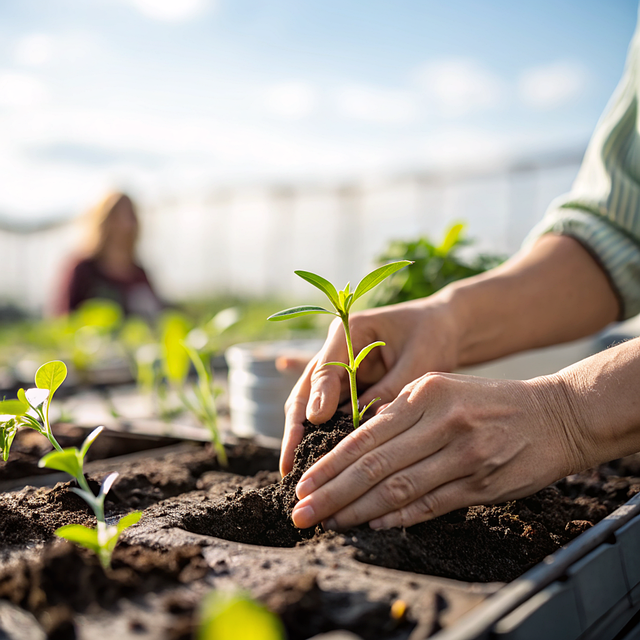
Organized farm record binder with soil test results planting calendars and yield tracking sheets on a wooden desk
Essential Data Points

Six Categories Every Small Farm Should Track 📊

You do not need to record every detail of every task. Focus on these six categories, and you will have the data necessary to evaluate your rotation plan, measure soil improvement, and make confident planting decisions year after year.

Planting & Harvest Dates

Record the exact date each crop goes into the ground and the date you start harvesting. Include transplant dates versus direct-seeding dates, as these affect growth timing differently. Over several years, this data reveals your true growing windows, which are often shorter or longer than published averages for your zone. You will also discover which varieties mature fastest on your specific fields, allowing you to fine-tune successions and avoid gaps in your market supply.

Yield Per Field or Bed

Weigh or count your harvests by location, not just by crop. A tomato plant in Field A might produce 12 pounds while the same variety in Field C gives you 8 pounds. That difference tells you something about soil conditions, drainage, or sun exposure in each area. Track yield in consistent units (pounds per bed, bushels per acre, or crates per row) so you can compare across seasons. This is the single most important number for evaluating whether your rotation and soil management are actually improving productivity.

Soil Test Results

File every soil test result with the date and specific field or bed location. At minimum, track pH, organic matter percentage, phosphorus, potassium, calcium, and magnesium. If your lab reports micronutrients (boron, zinc, manganese, iron), include those as well. Create a simple chart or table that shows each field's numbers side by side across years. The trend matters far more than any single test. Our soil tracking template includes a pre-built comparison layout that makes this effortless.

Amendments & Applications

Every time you apply compost, lime, fertilizer, rock phosphate, kelp meal, or any other soil amendment, write down what you applied, how much per area, and where. Do the same for foliar sprays, pest treatments, and cover crop seed mixes. This data is essential for calculating your true input costs per crop, and it provides the paper trail needed for organic certification audits. It also prevents accidental over-application, which wastes money and can harm soil biology or pollute waterways.

Weather Observations

You do not need a weather station to keep useful weather records. A daily note of the high temperature, whether it rained, and an estimate of rainfall amount provides enormous value when reviewed alongside yield and planting data. After three seasons, you can see how weather patterns correlate with your best and worst harvests. Mark the dates of your first and last frost each year. Note prolonged wet or dry spells. These observations explain yield variations that soil tests alone cannot account for.

Rotation Sequence Map

Draw a simple map of your farm with each field, bed, or growing area labeled. For each season, note what crop family occupied each space. This running map is the backbone of your rotation plan because it shows at a glance whether you are maintaining adequate breaks between same-family plantings. Color-coding by crop family (green for legumes, blue for brassicas, orange for solanaceae) makes it easy to spot when a section is overdue for a rest crop or cover crop cycle.

Free Downloads

Printable Templates & Digital Spreadsheets 📋

Each template is available as a printable PDF for clipboard-in-the-field use and as a digital spreadsheet for those who prefer to work on a computer or tablet. All templates are free to download and use. No account required.

4-Year Rotation Planner Worksheet

A single-sheet layout that maps four years of crop rotation across up to twelve fields or beds. Each cell includes space for the crop name, variety, crop family code, planting date, and a notes line. The sheet also includes a crop family reference key so you never accidentally repeat the same family too soon. Print one copy per growing area and keep them in a binder organized by field.

PDF Format Spreadsheet Format 1-50 Acres

Soil Test Tracking Log

Record and compare soil test results across multiple fields and multiple years on a single page. The log includes pre-labeled columns for pH, organic matter, P, K, Ca, Mg, CEC, and base saturation. A built-in trend section lets you chart changes over time using a simple dot-and-line method that works on paper. The digital version auto-calculates year-over-year changes and highlights values that fall below optimal ranges for common vegetable crops.

PDF Format Spreadsheet Format Multi-Year

Yield & Harvest Tracker

Track harvest weights, counts, and quality ratings for each crop by field location. Includes columns for harvest date, variety, unit of measurement, total harvested, percentage sold versus personal use, and revenue generated. The digital spreadsheet version calculates revenue per bed foot and revenue per square foot automatically, giving you clear profitability data that helps you decide which crops deserve more space in future rotation cycles.

PDF Format Spreadsheet Format Per-Season

Cover Crop & Amendment Log

Document every cover crop planting (species, seeding rate, planting date, termination date, method) and every amendment application (product, rate per area, cost, source). This log provides the documentation trail for organic certification and for USDA conservation program cost-share reimbursement. It also lets you calculate your total input costs per field per year, so you can track whether your soil-building investments are reducing the need for purchased fertility over time.

PDF Format Spreadsheet Format Annual

Weather & Field Observation Journal

A daily log designed for quick entries: high and low temperature, precipitation (yes/no and estimated amount), wind conditions, and a general field observation note. The notes section prompts you to check for pest damage, weed pressure, cover crop growth stage, and soil moisture level. Takes under two minutes to fill in each day. The weekly summary section on each page lets you review the week at a glance and flag any concerns for follow-up.

PDF Format Monthly Pages

Farm Field Map Template

A blank grid-based field map that you customize to match your farm layout. Draw in your beds, fields, paths, buildings, and permanent plantings. Then use color-coded sticky notes or colored pencils to mark each season's crop family placement. The template includes a crop family color key and a legend for marking irrigation lines, compost piles, and cover crop areas. Print multiple copies and layer them in a binder to see your rotation history at a glance.

PDF Format Customizable
Implementation Guide

Setting Up Your Farm Record System in 5 Steps 🗂️

A record-keeping system only works if it fits into your routine. This step-by-step guide walks you through building a system that takes ten minutes or less per week to maintain and delivers actionable insights by the end of your first full season.

1

Draw Your Farm Map and Label Every Growing Area

Start by sketching your farm on the blank field map template. It does not need to be precise or to scale. The goal is to create a reference that assigns a unique name or number to every bed, row, or field where you grow crops. Use simple labels like "Field A," "Bed 1 through 12," or "North Garden" and "South Garden." This labeling system becomes the foundation for every other record you keep, because every data point (yield, soil test, amendment) gets tied to a specific location.

Include permanent features like buildings, roads, water sources, and hedgerows. These affect drainage, wind exposure, and shade patterns that influence crop performance in surrounding areas. Mark any areas with known issues (poor drainage, heavy clay subsoil, rocky patches) so you can track whether your management is improving those problem zones over time.

2

Get Baseline Soil Tests for Each Major Growing Area

Before you plant anything new, pull soil samples from each labeled field or bed group. Your local agricultural extension office can explain the proper sampling technique (typically a composite of 10 to 15 cores taken at plow depth from across the area). Send samples to an accredited lab and request a standard fertility panel plus organic matter percentage.

When results return, record them immediately in the soil test tracking log. These baseline numbers are your starting point. Every future test gets compared against these to measure progress. If organic matter is 1.8% this year and 2.4% next year, your cover crop and compost program is building soil carbon. If pH dropped unexpectedly, you know to investigate before the next planting. Without the baseline, you have no frame of reference.

3

Fill in Your Rotation Plan for the Coming Year

Using the 4-year rotation planner worksheet, assign each growing area a crop family for the upcoming season. Reference last year's map (or your memory, if this is year one) to make sure you are not repeating the same family in any space where it grew within the past two to three years. If you are just starting, use our interactive rotation planner to generate a customized multi-year sequence for your farm.

Write in the specific crops and varieties you plan to grow in each location. Leave a line for the cover crop you will plant after harvest. This completed worksheet becomes your planting roadmap for the entire season. Pin it on the wall where you can reference it quickly.

4

Establish a Weekly Ten-Minute Recording Habit

Pick one day each week, the same day every week, as your record-keeping day. Sunday evening or Monday morning works well for many farmers. Spend ten minutes updating your logs with the week's activities: what got planted, what got harvested (and how much), any amendments applied, weather highlights, and field observations. Keep your binder or laptop in the same spot so you do not waste time looking for it.

Consistency matters more than detail. A complete record with brief entries is far more useful than sporadic entries with extensive notes. If you miss a week, do not try to reconstruct it from memory. Just pick up where you left off. The data you capture consistently for nine months of the year is more than enough to make good decisions.

5

Review Records Each Winter and Adjust Your Plan

During the off-season or slower months, sit down with your full year of records and review them. Compare yields across fields. Look at which crops outperformed expectations and which underperformed. Cross-reference yield data with soil test results and amendment records. Ask yourself: did the fields where I applied more compost produce higher yields? Did the cover crop I planted in fall establish well, or should I switch species next year?

This annual review is where the real value of record-keeping reveals itself. It takes about one to two hours, and it replaces weeks of uncertainty with clear, data-driven adjustments. Write down three to five specific changes you will make to your rotation, amendment, or cover crop strategy based on what the records show. Then update your rotation planner worksheet for the coming year.

Quick Entry Tool

Field Activity Logger ✏️

Use this quick-entry form to log a field activity right now. Your entries are saved to your browser so you can review them later. This tool is designed for fast, on-the-go recording when you are out in the field.

By submitting, you agree to our Privacy Policy. Data is saved locally in your browser only.

Seasonal Checklist

End-of-Season Record Review Checklist ✅

Use this checklist during your winter planning session to make sure you are extracting the full value from the records you kept throughout the growing season. Each item should take only a few minutes to complete, and together they give you a comprehensive picture of where your farm stands and where it needs to go.

Compare yields by field for each crop grown this year

Identify your top-performing and weakest fields for each crop family.

Review soil test trends from the past 2-3 years

Check whether organic matter, pH, and key nutrients are moving in the right direction.

Calculate total input costs per field

Sum up seed, amendment, cover crop, and labor costs for each growing area.

Evaluate cover crop establishment and biomass production

Note which species established well and which struggled. Consider switching varieties or planting dates.

Check rotation compliance against your plan

Did you follow the planned rotation, or did market demand or weather force changes? Document deviations.

Note pest and disease issues by location

Were problems concentrated in certain areas? This often points to rotation gaps or drainage issues.

Write 3-5 specific changes for next year's plan

Based on your review, list actionable adjustments to rotation, amendments, or management practices.

Schedule next year's soil tests

Put dates on the calendar now so testing happens at the right time, not as an afterthought.

Farmer reviewing handwritten crop records and soil test results at a desk during winter planning season

Pro Tip: Keep Records in Two Places

Maintain a physical field binder that goes with you outdoors, and transfer key numbers to a digital spreadsheet weekly. The physical copy survives dead batteries and muddy hands. The digital copy gives you search, sort, and charting capabilities. If you only have time for one system, go with paper. A filled-out binder at the end of the season is infinitely more useful than an empty spreadsheet file on a computer.

Common Challenges

Troubleshooting Your Record-Keeping System 🔧

Even farmers who start with good intentions run into obstacles. Here are the most common record-keeping problems we hear about, along with fixes that have worked for others.

"I always forget to write things down"

Set a recurring weekly alarm on your phone for your chosen recording day. Keep the binder on your kitchen table or next to your coffee maker so it is visible. Some farmers snap a quick photo of their fields with their phone each day and use the photos to jog their memory during the weekly recording session. The photos serve as a visual diary that makes filling in the written log much faster.

"The templates are too complicated"

Start with just two templates: the rotation planner worksheet and the yield tracker. These two provide the most immediate value with the least effort. Add the soil test log once you have your first round of results. Add other templates as your comfort grows. You can always adopt the full system later. A simple system you actually use beats a comprehensive one you abandon by June.

"I do not know how to interpret my soil test numbers"

Our nutrient management guide includes a detailed section on reading soil test reports. Most labs also include interpretive notes with your results. Contact your county extension agent for a free consultation on understanding your specific numbers. Record the results even if you do not fully understand them yet. As your knowledge grows, those historical records become increasingly valuable.

"I changed my rotation mid-season and now my records are a mess"

This happens to every farmer. Simply cross out the original plan and write in what actually got planted. Record the reason for the change in the notes column (weather delay, seed failure, market opportunity). The deviation itself is valuable data. At the end of the season, you can evaluate whether the unplanned change worked out well or whether you should have stuck with the original plan.

Ready to Build Your Rotation Plan? 🌿

Your records are only as useful as the plan they support. Use our free interactive rotation planner to generate a customized multi-year rotation schedule, then track your results using the templates on this page. Together, these tools give you a complete system for managing soil health and improving productivity season after season.

Stay Updated

Seasonal Tips Delivered to Your Inbox 📬

Get practical, timely advice for each growing season. Our newsletter covers rotation reminders, cover crop planting windows, soil amendment timing, and record-keeping tips matched to the time of year. One email per month during the growing season and one during winter.

By subscribing, you agree to our Privacy Policy. Unsubscribe anytime.