Tons of topsoil lost globally per year
Erosion reduction with cover crops alone
Years to rebuild 1 inch of topsoil naturally
Average annual cost of soil erosion to US farms
Erosion occurs when soil particles are detached from the ground surface and transported elsewhere by water, wind, or gravity. On small farms, even moderate erosion strips away the most biologically active and nutrient-dense layer of the soil profile. The topsoil that took centuries to develop can vanish from a sloped field in a single heavy rainstorm if the ground is bare.
Water erosion is the most common type in humid and temperate regions. It starts as sheet erosion, a thin uniform layer of soil carried off by surface runoff. Left unchecked, sheet erosion concentrates into rill erosion, creating small channels in the field. These rills can deepen into gullies, which are expensive and difficult to repair. A single gully on a hillside field can remove several tons of soil per storm event.
Wind erosion dominates in arid and semi-arid regions where soil is dry and loose for extended periods. Fine particles carry away first, and these fine particles contain the highest concentration of organic matter and nutrients. Farms in the Great Plains, parts of the Pacific Northwest, and the Central Valley of California are particularly vulnerable to wind erosion during dry months.
The financial impact compounds over time. Each inch of topsoil lost reduces yield potential by roughly 6 percent for most grain and vegetable crops. For a small farm, that translates directly into lower revenue and higher input costs as you attempt to compensate for diminished fertility with purchased amendments.
Answer these questions to gauge your farm's erosion vulnerability:
If you answered yes to two or more questions, erosion control should be a priority on your farm. The methods below are listed from simplest to most involved.
We have organized these methods from the easiest to implement to the most resource-intensive. Most small farms benefit from combining two or three approaches. Start with the management-based practices and add structural elements as your budget allows.
The simplest erosion control measure is leaving crop residue on the soil surface after harvest instead of tilling it under or removing it. Stalks, leaves, and stems from the previous crop create a natural armor that absorbs the impact energy of raindrops before they strike bare soil. A single raindrop falling from cloud height can detach thousands of soil particles upon impact. When residue covers even 30 percent of the surface, splash erosion drops dramatically.
For vegetable farms where crop residue is limited, straw mulch serves the same function. Apply a 2 to 4 inch layer of straw between planted rows and around transplants. Straw mulch also suppresses weeds, moderates soil temperature, and conserves moisture. Wood chip mulch works well for perennial pathways and around fruit trees but decomposes more slowly and can temporarily tie up nitrogen if mixed into soil.
Straw mulch; free if using own residue
No special equipment needed
Depending on coverage density
Cover crops are the single most effective biological erosion control tool available to small farms. Living roots hold soil in place far better than dead residue alone, and the canopy intercepts rainfall before it reaches the ground. A dense stand of cereal rye planted in fall can reduce winter and spring soil loss by 70 to 90 percent compared to bare fields.
For erosion-prone slopes, choose cover crops with aggressive root systems that establish quickly. Cereal rye, annual ryegrass, and oats are top performers in cool seasons. For warm-season coverage, sorghum-sudan grass and buckwheat germinate rapidly and form dense canopies within weeks. Crimson clover and hairy vetch provide both erosion protection and nitrogen fixation when you want dual benefits from your cover crop investment.
The key to erosion control with cover crops is timing. Seed them as early as possible after cash crop harvest. Every week of bare ground between harvest and cover crop establishment is a week of erosion vulnerability. If you cannot seed immediately after harvest, consider interseeding the cover crop into the standing cash crop 2 to 4 weeks before harvest. Visit our cover crop selection guide for species-specific planting windows and seeding rates.
Seed cost; may qualify for NRCS cost-share
Requires seed drill or broadcast spreader
With full canopy establishment
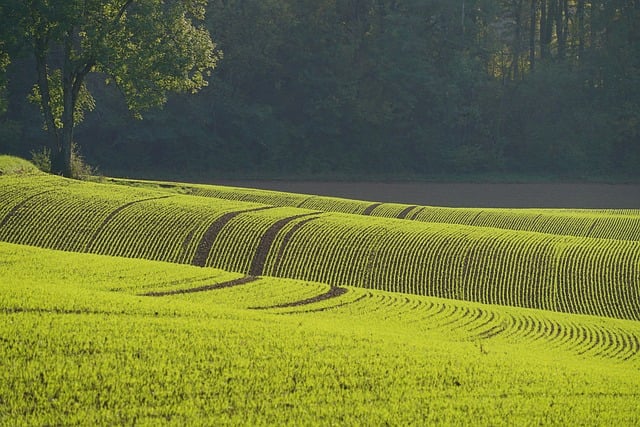
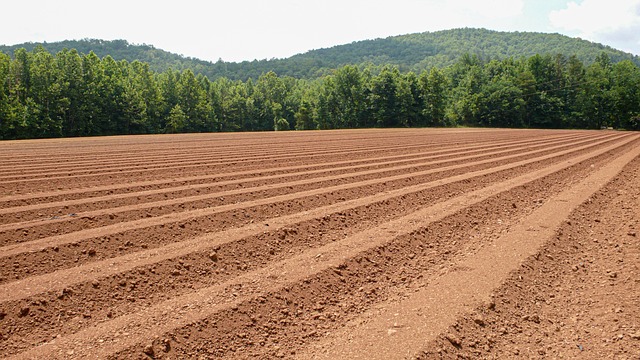
Contour farming means planting, cultivating, and harvesting along the natural contour lines of sloped land rather than up and down the slope. Each row acts as a small dam that slows water runoff and gives it time to soak into the soil rather than flowing downhill and carrying soil particles with it. On slopes of 2 to 8 percent, contour farming alone can reduce water erosion by 30 to 50 percent.
Strip cropping takes contour farming further by alternating strips of dense-growing erosion-resistant crops (like small grains or grass hay) with strips of row crops (like vegetables or corn). The dense strips trap soil and slow runoff generated by the row crop strips. Typical strip widths range from 50 to 120 feet, depending on slope steepness. Steeper slopes require narrower strips to maintain effectiveness.
To lay out contour lines on your farm, you need a simple A-frame level or a laser level and some stakes. Walk across the slope at your desired starting height and mark points that are at the same elevation. Connect these points with a smooth curve, and that becomes your first planting row. Subsequent rows follow the same contour at regular intervals down the slope. Your local NRCS office can help with contour layout at no cost in many counties.
Mostly labor; minimal materials needed
Requires initial contour mapping
On slopes of 2β8%
A grassed waterway is a shallow, sod-lined channel installed along the natural drainage path of a field. Instead of allowing concentrated water flow to carve gullies, the waterway guides runoff safely across the landscape while the thick grass root system filters out sediment and slows the water velocity. Properly designed waterways can handle storm flows that would otherwise create damaging gullies within a single season.
Vegetative buffer strips serve a similar function along field edges, especially adjacent to streams, ditches, or property boundaries. A buffer strip is a permanent planting of dense grasses, shrubs, or trees positioned between cropland and a water body. Buffers as narrow as 20 feet can filter 50 percent of sediment from runoff. Wider buffers of 50 to 100 feet can capture 80 to 95 percent of sediment and significant amounts of dissolved nutrients.
For grassed waterways, the design process involves measuring the drainage area, estimating peak runoff volume, and sizing the channel width and depth accordingly. Cool-season grasses like tall fescue, smooth bromegrass, and Kentucky bluegrass are common choices because they form dense sod that withstands water flow. Warm-season alternatives include bermudagrass and switchgrass. The establishment period is critical: newly seeded waterways need protection from concentrated flow for one full growing season until the grass is well rooted.
Per waterway; NRCS cost-share often available
May require grading equipment
For concentrated flow areas
Terraces are earthen embankments or channels constructed across the slope to intercept runoff, reduce its velocity, and either store the water temporarily or direct it to a safe outlet. They are the most effective structural erosion control practice for slopes steeper than 8 percent where other methods alone cannot adequately protect the soil.
For small farms, two terrace types are most practical. Broad-based terraces have gently sloping sides that allow farm equipment to cross over them, making them suitable for mechanized operations. They work well on slopes of 4 to 12 percent. Bench terraces create flat or nearly flat planting areas on steep hillsides by cutting into the slope and building up the downhill edge. These are common on slopes exceeding 12 percent and are widely used in hilly regions for vegetable production and orchards.
Building terraces requires careful engineering. The spacing between terraces depends on slope steepness, soil type, and expected rainfall intensity. Most terraces need a grade of 0.1 to 0.5 percent along their length to guide water toward a grassed waterway or underground outlet without causing erosion within the channel itself. Poorly designed terraces that hold too much water or release it too quickly can fail during heavy storms and actually worsen erosion. Work with your local NRCS or conservation district engineer to ensure proper design before construction.
Varies greatly by slope and design
Requires earthmoving equipment
When properly designed and maintained
Windbreaks are rows of trees or shrubs planted perpendicular to the prevailing wind direction to reduce wind speed across farm fields. A well-designed windbreak reduces wind velocity by 50 to 70 percent on the leeward side for a distance of 10 to 20 times the height of the trees. For a 30-foot windbreak, that means protection extending 300 to 600 feet downwind.
Beyond controlling wind erosion, shelterbelts provide multiple co-benefits for small farms. They create microclimates that reduce crop water stress by lowering evapotranspiration rates. Snow catches along the windbreak provide additional soil moisture in spring. The trees themselves can be productive, offering fruit, nuts, firewood, or wildlife habitat. Pollinators frequently nest in windbreak vegetation, benefiting nearby crops that require insect pollination.
Effective windbreak design typically includes three to five rows of mixed species. The outer rows use dense shrubs like lilac or American plum for ground-level wind filtering. Interior rows include medium-height deciduous trees such as hackberry or red maple. The core row features tall evergreens like eastern red cedar, Norway spruce, or Austrian pine that provide year-round protection. This multi-row approach creates a porous barrier that slows wind without creating damaging turbulence on the leeward side.
Seedlings; state forestry programs offer discounts
Long-term investment; 3β5 years to full effect
Downwind protection zone
Follow this sequence to establish effective erosion control on your farm. Each step builds on the previous one. You do not need to complete everything in a single season. Prioritize the first three steps this year and add structural practices over the next two to three years as resources allow.
Map slopes, drainage patterns, and existing erosion features. Note where water concentrates during storms, where gullies are forming, and which fields have the steepest grades. Take photographs for your records.
Apply mulch to all active growing areas and seed cover crops within one week of cash crop harvest. This single action provides more erosion protection than any other practice. Even a quick-growing buckwheat stand is better than bare ground.
Switch from full-field moldboard plowing to strip tillage, shallow cultivation, or no-till methods. Each pass of the plow destroys soil aggregates and exposes fresh soil to erosion. Minimize the number and depth of tillage operations.
Mark contour lines using a simple A-frame level and adjust your planting rows to follow these curves. Alternate erosion-resistant crops with row crops in strip patterns on steeper slopes.
Seed grassed waterways along natural drainage paths. Establish buffer strips along streams and field borders. Plant windbreaks on the windward side of your most exposed fields. These permanent features need time to establish but provide decades of protection once mature.
NRCS and local soil and water conservation districts offer free technical assistance for erosion control planning. Many practices qualify for cost-share programs through EQIP (Environmental Quality Incentives Program) that can cover 50 to 75 percent of installation costs.
Walk your fields after every major rain event during the first year. Document what is working and where problems persist. Use our record-keeping templates to track erosion observations alongside yield data and soil test results.
Not sure where to start? Use this quick guide based on your primary erosion type:
Cover crops + residue management + contour planting
Terracing + grassed waterways + strip cropping + cover crops
Grassed waterway installation + diversion + upstream flow reduction
Windbreaks + cover crops + residue management + strip cropping
Riparian buffer strips + native plantings + bank stabilization
This side-by-side comparison helps you quickly evaluate which methods fit your farm's budget, timeline, and erosion challenges. Most effective programs combine two or more complementary approaches.
| Method | Cost/Acre | Erosion Reduction | Setup Time | Best For | Maintenance |
|---|---|---|---|---|---|
| Residue & Mulch | $50β$200 | 40β60% | Immediate | All field types | Reapply seasonally |
| Cover Crops | $25β$80 | 70β90% | 2β4 weeks | Off-season protection | Seed each season |
| Contour Farming | $0β$50 | 30β50% | 1β2 days | Slopes 2β8% | Maintain row alignment |
| Grass Waterways | $300β$1,500 ea. | 80β95% | 1 growing season | Concentrated flow areas | Mow 2β3x/year |
| Terracing | $500β$3,000 | 80β95% | 1β2 weeks | Slopes >8% | Annual inspection & repair |
| Windbreaks | $2β$8/ft | 50β70% wind | 3β5 years full effect | Wind-prone areas | Prune & replace as needed |
Cost estimates are based on 2025-2026 averages for the continental US. Actual costs vary by region, soil conditions, and material availability.
Even well-planned erosion control systems encounter challenges. Here are the issues we hear about most frequently from small farm operators, along with practical fixes.
Late harvest windows sometimes push cover crop seeding past the reliable germination window. For next season, plan to interseed the cover crop into the standing cash crop 3 to 4 weeks before expected harvest. Alternatively, switch to cold-tolerant species like winter rye or hairy vetch that can germinate at soil temperatures as low as 34Β°F. As an emergency measure, spread straw mulch at 2 tons per acre to protect bare fields through winter.
Terrace overtopping usually means the channel capacity was undersized for the drainage area or the outlet is partially blocked. Clean outlets immediately after every storm event during the first year. If overtopping persists, the terrace may need widening or a second terrace upslope to split the drainage area. Consult your NRCS engineer for a capacity assessment. In the meantime, seed the terrace face with dense grass to resist scour if overtopping occurs.
Farm equipment crossing waterways when the soil is wet creates ruts that concentrate water flow and destroy the sod. Install designated crossing points with geotextile fabric and gravel at the narrowest section of the waterway. Mark crossing locations clearly so all operators know where to cross. Never drive through waterways during or immediately after rain events. Allow at least 24 hours of drying time before crossing with heavy equipment.
Slow windbreak establishment leaves fields vulnerable for years. In the short term, install temporary snow fencing or plant fast-growing annual species like sunflowers or corn in rows alongside the young trees. These provide immediate wind reduction while the permanent trees develop. Ensure newly planted trees receive adequate water during their first two summers. Weed competition around tree bases is the primary reason for slow growth, so maintain a 3-foot weed-free zone around each tree using mulch.
On certain soil types, contour furrows can trap water and create waterlogged zones that harm crops. Switch to graded contours that have a slight fall (0.1 to 0.3 percent grade) along their length, directing collected water slowly toward a grassed outlet. On clay soils, consider incorporating organic matter or sand into the row zone to improve internal drainage. If ponding persists, install subsurface drainage tile to move excess water out of the root zone.
Erosion control is an ongoing process, not a one-time installation. Practices degrade over time if not maintained. Inspect all structural practices (terraces, waterways, diversions) at least twice per year: once before the main storm season and once after. Check for rodent burrows in terrace banks, sediment accumulation in waterway channels, and dead spots in vegetative covers. Address issues immediately before they cascade into larger failures.
Cover crops, residue management, and strip cropping are not standalone practices. They fit naturally into a well-designed crop rotation plan. When you alternate deep-rooted crops with fibrous-rooted ones, include regular cover crop phases, and sequence your plantings to keep the ground covered year-round, erosion control becomes an inherent part of your farming system rather than an added expense. Use our rotation planner to build a schedule that integrates these erosion control practices seamlessly with your cash crop production.
Detailed profiles of 35+ cover crop species with planting windows, seeding rates, and termination methods for each climate zone.
Read the guide
Understand how erosion depletes your most valuable nutrients and how rotation-based nutrient management rebuilds fertility naturally.
Read the guide
Download printable erosion monitoring logs, soil test tracking sheets, and practice maintenance schedules for your farm records.
Get templatesReceive timely reminders for cover crop seeding windows, erosion inspection schedules, and practical management advice matched to the season. One email per month during the growing season. No spam.
By subscribing, you agree to our Privacy Policy. Unsubscribe anytime.